
Guides / Convenience
Remote start explained: key vs push-to-start
Remote start warms up or cools down your car before you get in. What your car needs depends on whether it's key-start or push-to-start, and how you want to control it: remote, phone app, or your factory key.
Push-to-start and key cars need different setups; push-to-start usually needs a bypass module. Control options: a 1-way remote, a 2-way remote that confirms it started, a phone app, or your factory key (lock three times). Manual transmissions and some vehicles have extra safety steps.
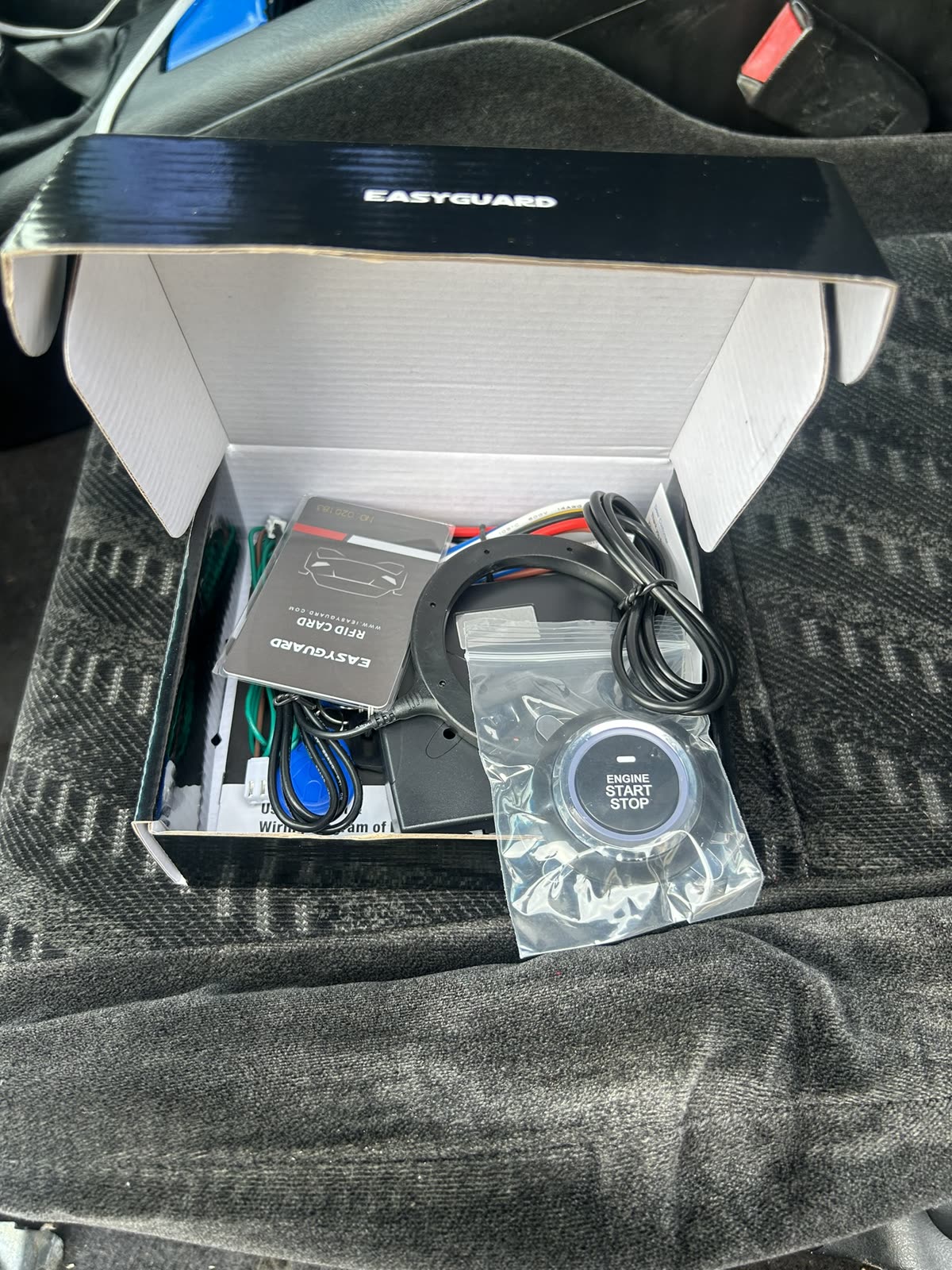
Key vs push-to-start
Most modern cars have an immobilizer that only lets the engine run with your key or fob present. To remote-start safely, a bypass module (from Fortin, iDatalink/ADS, or DEI) mimics that key so the car starts without leaving a real key in it. Push-to-start cars almost always need this module; I flash it with your vehicle's firmware before install.
Control options
- 1-way remote: sends the start command, no confirmation back.
- 2-way remote: buzzes or shows that the car actually started. Good range and feedback.
- Smartphone app (e.g. DroneMobile): start, lock and locate from anywhere with cell service. Basically unlimited range, usually a small subscription after a free trial.
- Factory key, lock ×3: a system that lets you press Lock three times on your existing key to start. Clean and simple, no extra remote.
Range
Basic 1-way fobs are short-range. Premium 2-way remotes can reach up to a mile or more. The phone app has no distance limit as long as both have signal.
Manual transmissions
Remote start on a stick shift needs a safety "reservation" procedure and clutch/brake logic. Not every system supports it, and it must be set up carefully.
Hood pin safety
A hood pin switch shuts the remote start off when the hood is open, so the engine can't start while someone's working under it. An important safety part.
Kill switches on push-to-start
A hidden kill switch can be added for anti-theft, but on push-to-start vehicles the options are more limited than on older key cars. I'll tell you honestly what's possible on your car.
"Will it void my warranty?"
No. Installing a remote start does not automatically void your factory warranty. Under the federal Magnuson-Moss Warranty Act (in effect since 1975), a dealer can't void your warranty just because you added an aftermarket part. As the FTC puts it, "your warranty stays in effect if you use aftermarket or recycled parts," and the manufacturer or dealer "must prove the aftermarket or recycled part caused the damage before they can deny warranty coverage." So a properly installed remote start is fine. If something it touched genuinely caused a failure, that specific repair could be denied, but the rest of your warranty stands.
What you'll need
Remote start system (with remote and/or app module); vehicle-specific bypass module + T-harness; hood pin switch; sometimes a dash or ignition harness.
What it costs to install (labor only, parts separate)
Remote start: from $125 (push-to-start may need an extra bypass module, quoted after I get your year, make and model)
Common mistakes
- Buying a system with no bypass module for a push-to-start car.
- Expecting long range from a basic 1-way fob.
- Assuming manual-transmission start is always possible.
- Believing the myth that remote start voids your warranty.
FAQ
Does it work on push-to-start?
Yes, with the right bypass module.
Can I start it from my phone?
Yes, with an app-based module like DroneMobile.
How far does it reach?
A mile-plus on good 2-way remotes; unlimited via app.
Manual transmission?
Sometimes. It needs a special safety setup.
Warranty?
It won't void it (see above).
What I need from you: year, make, model; key or push-to-start; how you want to control it (remote, app, factory key); your city.
Related: Remote start installs and pricing · GPS tracker & kill switch
Not sure what your car needs?
Text me your year, make, model and what you want done. I'll tell you what fits and what it costs.